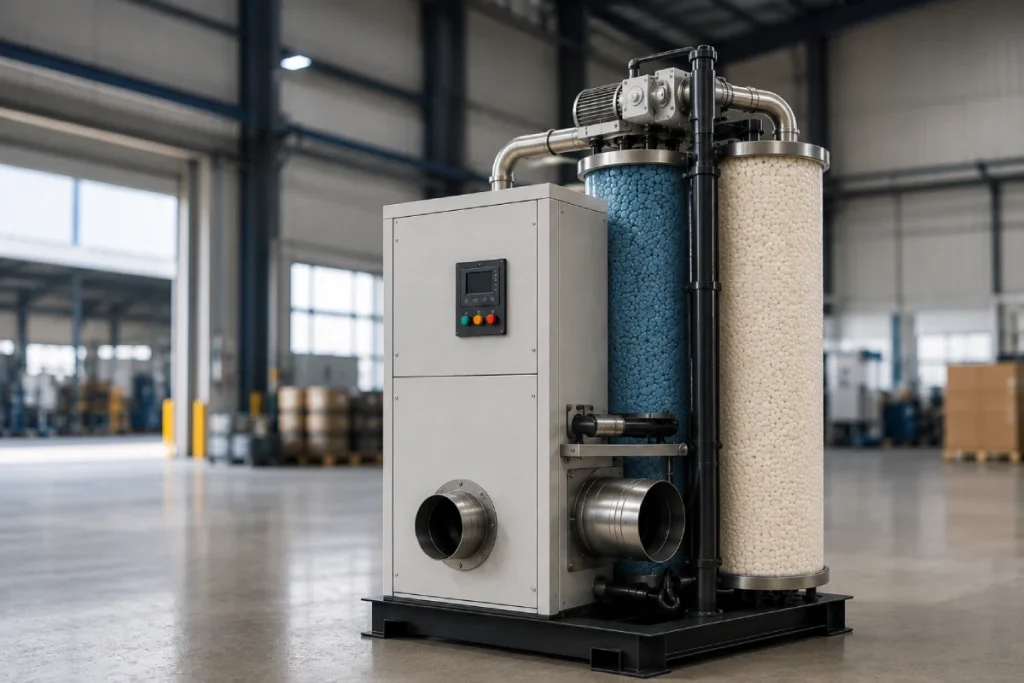
High humidity is a silent threat to many businesses across Saudi Arabia. Whether you manage a massive food storage facility in Jeddah or a delicate cleanroom in Riyadh, excess moisture in the air causes massive problems. It spoils products, damages sensitive electronic parts, rusts steel equipment, and creates perfect conditions for mold to grow.
To combat this, many business owners turn to specialized machines to dry out the air. But what are desiccant dehumidifiers, and how do they fit into your operations?
This comprehensive guide breaks down exactly what a desiccant dehumidifier system is, how it functions, and when it is the single best choice to protect your business assets and cut down your monthly energy bills.
Table of Contents
Understanding the Threat: Saudi Arabia’s Unique Climate Challenge
When most people think of Saudi Arabia, they imagine dry, sweeping desert dunes. But if you operate a business along the coastlines, you know a completely different reality.
The Realities of Coastal and Interior Humidity
Coastal regions like the Eastern Province (including Dammam, Khobar, and Jubail) and the Western Province (Jeddah and Yanbu) experience extreme humidity levels. During the long summer months, relative humidity (RH) routinely climbs past 80% to 90%.
Even in interior desert cities like Riyadh, air conditioning setups bring in outside air for ventilation. When this hot, wet air meets cold indoor surfaces, moisture condenses instantly.
The Problem with the Heat Index
High relative humidity makes hot temperatures feel far worse due to the heat index. The heat index measures what the temperature actually feels like to the human body when relative humidity is combined with the air temperature.
When humidity is high, sweat cannot evaporate off human skin to cool the body down. This creates a dangerous, stuffy indoor environment that lowers worker productivity and strains electronic components.
The Hidden Burden on Your HVAC System
Relying entirely on standard Heating, Ventilation, and Air Conditioning (HVAC) systems to handle high humidity is a very expensive mistake.
Standard air conditioners are designed to lower the temperature, not dry out the air. When forced to remove deep moisture, the cooling coils must work twice as hard. This causes massive HVAC energy consumption spikes and leads to early equipment failure.
According to engineering reports from the Saudi Council of Engineers (SCE), excessive humidity can increase commercial HVAC power draws by up to 30% because the system must constantly fight latent heat loads rather than just cooling the room.
The True Burden of High Humidity Across Key Business Sectors
Moisture does not treat all industries equally. Let’s look at the exact impact of high humidity across various commercial and industrial spaces.
1. Industrial & Manufacturing Sector
In large manufacturing facilities, moisture in the air causes raw metal parts to rust overnight. It also ruins chemical compounds before they can be processed.
Using an industrial desiccant dehumidifier keeps the relative humidity low enough to stop oxidation completely, protecting your expensive production machinery and raw materials.
2. Pharmaceutical, Cleanrooms & Laboratories Cluster
Medicines and pills are highly sensitive to moisture. If a pharmaceutical lab drops below strict ambient targets, powders stick to processing machinery, and tablets crumble in their packaging.
For critical medical settings, a specialized unit like a desiccant dehumidifier for operating rooms or cleanrooms keeps the relative humidity exactly where it needs to be to preserve product purity and sterile conditions.
3. Cold Storage, Logistics & Warehousing Sector
Cold rooms and blast freezers run into severe issues when warm, wet air enters through open loading docks. This moisture turns into thick ice on floors, walls, and evaporator coils.
Installing a high-capacity desiccant dehumidifier cold room setup eliminates ice buildup, prevents slick floors for forklift safety, and stops product boxes from getting soggy and collapsing.
4. Hospitality & Commercial Spaces
Hotels, luxury gyms, and large indoor shopping malls must maintain a premium guest experience. If a desiccant dehumidifier bathroom or spa unit is not used, mold grows rapidly on tiles, walls, and carpets. This creates bad odors and ruins expensive indoor decorations.
5. Residential Applications
While industrial sites are the main users, premium homes also suffer from moisture damage. High indoor humidity warps luxury wooden floors, damages expensive clothing in closets, and causes respiratory issues for residents.
Using a localized system, like a high-end residential unit or a desiccant dehumidifier wall mounted option, keeps home living spaces comfortable all year.
What is a Desiccant Dehumidifier and How Does It Work?
So, what does a desiccant dehumidifier do exactly? Instead of using cold metal plates to condense water out of the air like a standard home unit, this system uses a special moisture-absorbing material called a desiccant (usually silica gel) to draw water vapor directly out of the air stream.
Step-by-Step: How Desiccant Dehumidifier Technology Works
To understand how desiccant dehumidifiers work, picture a large, slowly spinning wheel made of corrugated material filled with silica gel. This is called the desiccant rotor.
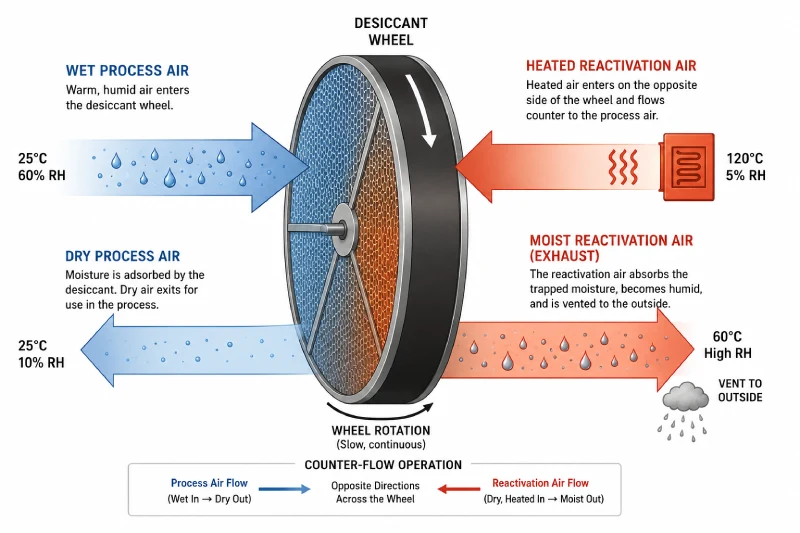
The machine splits the air into two separate paths:
- The Process Air Path: The damp air from your room is pulled into the machine. It passes directly through the spinning desiccant wheel. The silica gel acts like a giant sponge, trapping the water molecules. The dry air is then blown back out into your room.
- The Reactivation Air Path: To keep working, the wheel must get rid of the trapped water. A second, smaller stream of air is heated up to a high temperature (usually around 100°C to 140°C) and blown through a small section of the wheel. This hot air drives the moisture out of the silica gel. This hot, wet air is then vented outside of your building.
Because it uses this heat-driven process rather than a cold cooling coil, it can dry air to incredibly low levels without ever freezing up.
Desiccant Dehumidifier vs Normal Compressor Systems
When you decide to desiccant dehumidifier buy, you need to understand how it stacks up against a standard compressor-based (refrigerant) dehumidifier.
| Feature / Scenario | Compressor Dehumidifier | Desiccant Dehumidifier |
| Best Operating Temp | Warm rooms (above 20°C) | Works perfectly anywhere (0°C to 40°C) |
| Achievable Humidity | Hard to drop below 40% RH | Easily drops below 10% RH |
| Ice Risk in Cold Areas | High (coils freeze up constantly) | Zero risk (no cooling coils used) |
| Noise Levels | Higher due to internal compressor | Very quiet (only fan motors spin) |
| Primary Use Case | Everyday tropical environments | Deep industrial drying & cold rooms |
Why Temperature Matters
A normal compressor dehumidifier creates a very cold internal metal plate. When warm room air passes over it, water drips into a collection bucket. But if your room is cold like a food warehouse or a storage basement that metal plate drops below freezing. Ice sheets form on the machine, causing it to stop drying and go into a wasteful defrost cycle.
A desiccant dehumidifier commercial unit does not care about cold temperatures. Because it uses chemical attraction rather than condensation, it can pull water out of sub-zero air without ever frosting over.
The Core Benefits of Using Desiccant Dehumidification Technology
Investing in a high-grade desiccant dehumidifier system brings immediate operational advantages to your facility.
- Incredible Deep Drying Power: If your process requires ultra-low humidity (such as lithium-ion battery cleanrooms or specialty drug packing lines), a desiccant system is the only technology capable of pulling relative humidity down to single digits.
- Peak Performance in Low Temperatures: It maintains absolute consistency inside blast freezers, agricultural cold stores, and outdoor marine environments where compressor units fail.
- Lower Maintenance Over Time: These systems do not use chemical refrigerants or complex compressors. Fewer moving parts mean less mechanical breakdown risk and fewer service calls.
- Improved Indoor Air Quality: Many high-performance models combine paths to act as a desiccant dehumidifier and air purifier, catching airborne dust particles while stripping out excess moisture.
Technical Features: What Makes These Systems Stand Out?
If you want to find the best desiccant dehumidifier 2026 models for your commercial space, look for these specific, high-performance design features:
- High-Efficiency Silica Gel Rotors: Advanced PPS rotors hold more moisture per square meter and last for over ten years of continuous operation before needing replacement.
- Precise Microprocessor Controllers: Automated control systems track real-time indoor humidity and adjust the reactivation heater output automatically to maximize desiccant dehumidifier energy efficiency.
- Rugged Double-Wall Enclosures: Heavy-duty, corrosion-resistant steel casings ensure the machinery survives the harsh, salty coastal air of Dammam or Jeddah.
- Flexible Installation Designs: Systems can be configured as a desiccant dehumidifier for greenhouse use, integrated into central duct networks, or mounted directly onto walls as a desiccant dehumidifier wall mounted unit.
What Size Desiccant Dehumidifier Do I Need?
Choosing the wrong machine size leads to high energy bills or unresolved moisture problems. To determine the right size for your space, our engineering teams calculate your exact latent moisture load.
This calculation looks at several key variables:
- Total Cubic Volume: The height, width, and length of the space you need to dry.
- Ambient Temp and Current RH: The starting state of the air versus your exact target humidity goal.
- Air Infiltration Rates: How much outside air leaks into the building through open loading bays, doors, and ventilation ducts.
- Internal Moisture Sources: The number of people working inside the space and any open water processes occurring during production.
For large facilities, a single small portable unit will not work. You need a properly scaled desiccant dehumidifier for large buildings to distribute dry air evenly to every corner.
Alternative Strategies to Reduce High Humidity (And Their Limits)
While buying a dedicated dehumidifier is the most reliable path, there are a few basic changes you can make to your building to help reduce moisture loads:
- Upgrade Building Insulation: Seal leaky doors and add heavy-duty weather stripping around loading docks to block wet outdoor air from seeping inside.
- Install High-Speed Air Curtains: Mount powerful downward-blowing air fans above high-traffic warehouse doors to form an invisible barrier that blocks outside humidity when doors open.
- Optimize Existing HVAC Settings: Ensure your AC fans do not run continuously when the cooling cycle turns off, as this can accidentally blow evaporated moisture back into your rooms.
The Bottom Line
While these structural fixes lower your overall moisture load, they cannot actively pull water vapor out of a sealed room. To maintain precise industrial conditions, an active dehumidifier remains absolutely necessary.
Featured High-Performance Brands for Your Business
To ensure long-term reliability, we source our commercial inventory from the world’s most trusted climate control manufacturers.
FRAL Dehumidifiers
FRAL specializes in rugged, industrial-grade systems built for heavy use. Their equipment features thick, corrosion-proof frames that are perfect for harsh manufacturing plants and deep-sea logistics shipping lines.
Trotec Dehumidifiers
Trotec is a premier German brand known for incredible engineering precision. Their units feature smart electronic controllers that optimize desiccant dehumidifier energy consumption, making them an excellent choice for businesses looking to lower their monthly power bills.
Quest Dehumidifiers
Quest leads the industry in agricultural climate management. They provide the ideal desiccant dehumidifier for grow rooms and greenhouses, helping growers prevent crop crop-destroying mold without raising room temperatures.
TFT Dehumidifiers
TFT is a world leader in high-volume, deep-drying desiccant systems. Their large-scale rotors are perfect for cleanrooms, large pharmaceutical labs, and marine shipyard protection.
Top 10 Frequently Asked Questions (FAQs)
What is a desiccant dehumidifier good for compared to a regular unit?
A desiccant dehumidifier is perfect for low-temperature environments and processes that require ultra-low humidity levels below 40% RH. Unlike normal compressor units that freeze up in cold spaces, desiccant systems use a moisture-absorbing wheel that performs reliably down to 0°C. This makes them the ideal choice for cold storage warehouses, pharmaceutical cleanrooms, and industrial manufacturing plants across Saudi Arabia.
What is the average desiccant dehumidifier cost to run?
The operational cost depends entirely on your unit’s size and your local electricity rates. While desiccant systems use electric or steam heaters to dry out the internal wheel, they drastically reduce the load on your main HVAC system. By handling the latent moisture load independently, they prevent your air conditioning from working overtime, which often lowers the total power bill of a commercial facility.
Can I find a high-quality desiccant dehumidifier cheap?
While industrial desiccant units have a higher initial purchase price than simple home lookalikes, they save you money over time. Buying cheap, underpowered consumer equipment for a commercial facility leads to frequent burnouts, product spoilage, and high repair bills. Investing in a properly engineered commercial unit protects your business assets and lowers your long-term operating costs.
How does a desiccant dehumidifier and air purifier combo benefit health?
A combined system dries the room out while actively cleaning the air. By keeping relative humidity below 50%, it stops mold, mildew, and dust mites from multiplying. At the same time, internal air filters trap airborne dust, smoke, and fine particles. This dual action creates a clean, healthy workspace for employees and protects sensitive electronics from dust buildup.
What size desiccant dehumidifier do I need for my warehouse?
Sizing a warehouse system requires a professional latent load calculation. You must consider the total room volume, average indoor temperatures, how often doors are opened, and your target humidity level. A small portable unit cannot handle a commercial space; you need a system engineered for large buildings to ensure uniform drying performance.
Why is a desiccant dehumidifier for grow rooms necessary?
Agricultural grow rooms and greenhouses release massive amounts of water vapor into the air through plant transpiration. High humidity causes devastating crop diseases like root rot and powdery mildew. A specialized desiccant system controls moisture levels precisely without dropping room temperatures, ensuring healthy plant growth and maximum crop yields.
Why should I install a desiccant dehumidifier wall mounted unit?
Wall-mounted systems are perfect for spaces with limited floor area, like commercial corridors, labs, or luxury hotel bathrooms. Mounting the machine on the wall keeps floor paths clear for employees and equipment while providing continuous, quiet moisture control directly where it is needed most.
Is a desiccant dehumidifier energy efficiency rating high?
Yes, modern industrial systems feature smart, modulating reactivation heaters. These controllers track real-time room humidity and scale the heating power up or down automatically. This precise control avoids energy waste, making desiccant technology incredibly efficient for deep-drying industrial applications.
Where can I buy a desiccant dehumidifier supplier validated unit?
You should always purchase commercial systems through an authorized national distributor. Authorized suppliers provide genuine factory warranties, certified spare parts, and professional engineering support to size and install your equipment correctly for the local climate.
What are desiccant dehumidifier maintenance requirements?
Because they do not use compressors or refrigerants, these units require very little maintenance. You simply need to replace the intake air filters regularly and inspect the drive belt on the spinning rotor once or twice a year. This simple upkeep ensures the system runs at peak performance for more than a decade.
Conclusion & Next Steps: Secure Your Custom Air Solution
Managing indoor humidity is not just about comfort—it is a critical necessity to safeguard your products, protect your machinery, and reduce your monthly utility bills.
Where to Buy Dehumidifiers in Saudi Arabia
If you want to know where to buy dehumidifiers in Saudi Arabia, look no further than The Dehumidifier Shop. We are the Premier Authorized Distributor and leading supplier of top-tier global dehumidifier brands across the Kingdom, including FRAL, Trotec, Quest, and TFT.
Whether you need an integrated system for a large building, a compact wall-mounted setup, or a heavy-duty industrial unit, our experienced engineering team is here to help. We will calculate your exact moisture loads and design a high-efficiency solution tailored perfectly to your local climate.
Protect Your Business Today
Do not let high humidity drain your profits and damage your equipment. Contact our climate control specialists right now to request a detailed technical consultation or a direct Request for Quote (RFQ).
- Official Web Platform: The Dehumidifier Shop
- Get a Custom Quote: Click our online chat button or submit your project specs through our inquiry form for an expedited engineering response within 24 hours!